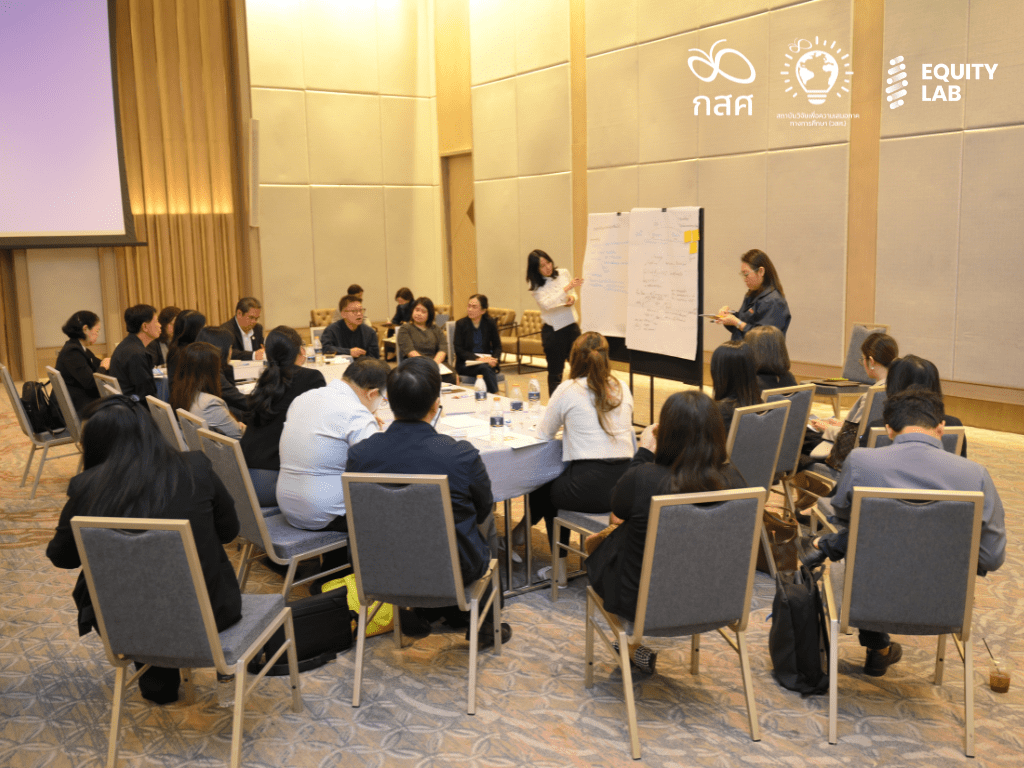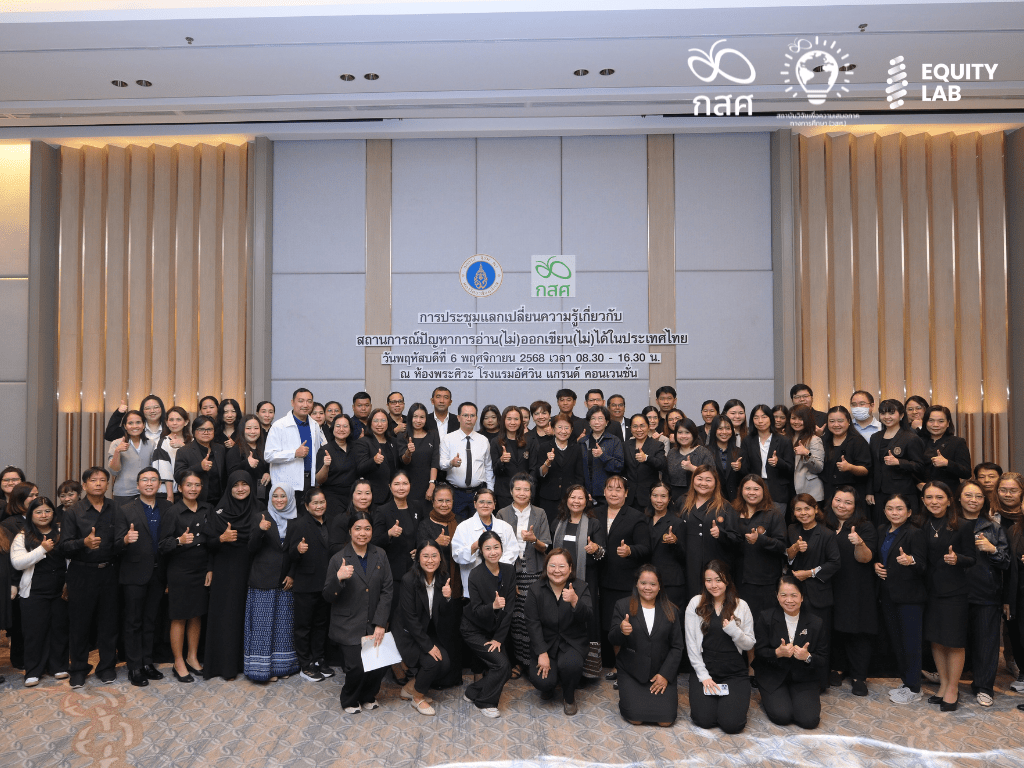

On November 6, 2025, in partnership with Mahidol University, the Equitable Education Research Institute (EEFI) and the Office of Teacher and School Quality Development, under the Equitable Education Fund (EEF), hosted a forum titled “Study of the Situation of Illiteracy in Thailand” at the Aswin Grand Convention Hotel. The forum’s objectives were to comprehend the various settings of learner problems, the roles and duties of stakeholders, the systemic issues that may contribute to illiteracy, and to acquire information from current research and innovation in order to generate research topics and identify solutions.
Assoc. Prof. Patamawadee Pochanukul, advisor to the Equitable Education Research Institute (EEFI) of the Equitable Education Fund, stated that relevant agencies have previously researched this issue. Past research has identified the causes of the problem in several areas, including health, culture and local languages, various ethnic groups, and teaching standards. However, the problem persists. Therefore, to address the problem effectively and sustainably, this forum serves as a platform for exchanging knowledge and finding solutions collaboratively with relevant network partners.
“This issue has been the subject of long-term research, but why does it continue? Since 1995, illiteracy has been a common concern in academic conference sessions. Numerous problems, including health issues, cultural elements, language, ethnic groupings, and even educational strategies, are covered by research. Whether visual or phonograph reading is more successful is a topic of discussion. Lastly, we spoke with researchers studying architecture on the problem of media design, which also presents challenges for children’s education. Given this complexity, we may need to exchange ideas, invite various networks to meet and discuss these challenges that we must address together.”

As a member of the Equitable Education Fund (EEF) executive board and chair of the subcommittee on teacher training and development for schools in remote areas and overall school quality improvement, Associate Professor Dr. Daranee Uthairattanakit said that she first encountered illiteracy in her early years of teaching. Teachers face a challenge in preparing, evaluating, and improving their pupils’ writing and reading abilities. Numerous elements are involved in this process, including the kid, family, community, and school instruction. She thinks that the inventions and technologies of today will be very helpful in quickly resolving this problem.

The issue of illiteracy has long existed, and numerous attempts have been made to address it, according to Dr. Udom Wongsingh, Director of the Equitable Education Fund’s (EEF) Office of Teacher and School Quality Development. The strategy is to put into practice solutions that are specific to the requirements and environment of each school, with an emphasis on creating instruments to deal with the issue and making sure they are consistently distributed and utilized.
“The problem of child illiteracy is currently on the national agenda. We are attempting to put policies into place that are specific to each school’s requirements and procedures. The primary issues, particularly with relation to illiteracy, are rather obvious: instructors instruct the kids, but parents are unable to teach them when they get home. Some kids struggle with speech or language. Some have rarely spoken during their nearly year-long attendance. The TSQM (School Quality Management) project is an illustration of our work. For example, the entire province of Lampang has adopted TSQM. There has been a noticeable improvement in first-grade students’ reading and writing abilities. In comparison to 2024, reading aloud increased from 80% to 92%, understanding and the capacity to recount what they have read increased from 65% to 92%, writing (proper vowel and consonant placement) increased from 63% to 77%, and sentence writing increased from 70% to 85%. Narathiwat Province, which is concentrating on TSQM over the entire province, is another example. “The total performance score is 68%, which is below the national average of 78% but better than the provincial average of 65%. We must keep working on this difficulty.”

Initiative leader Dr. Porntida Visaetsilapanon, an assistant professor, said the initiative is only getting started. As a result, they asked network partners to take part in analyzing current resources and reflecting on issues and concerns. The research team will be able to extract and synthesize findings as a result, especially from viewpoints at the policy level, driving processes, the classroom, family, or children themselves. Even if everyone has been collaborating to find a solution to this issue for the past 20 years, the digital age, shifting social conditions, and changing context call for a new conversation about how children should develop to meet literacy objectives.
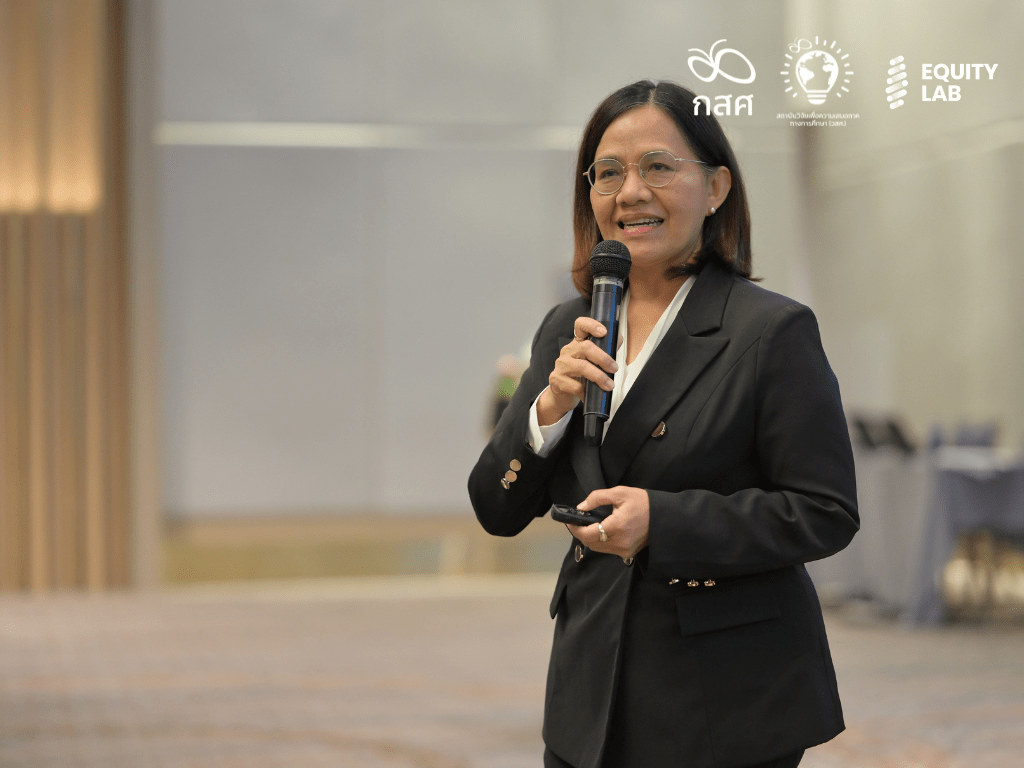
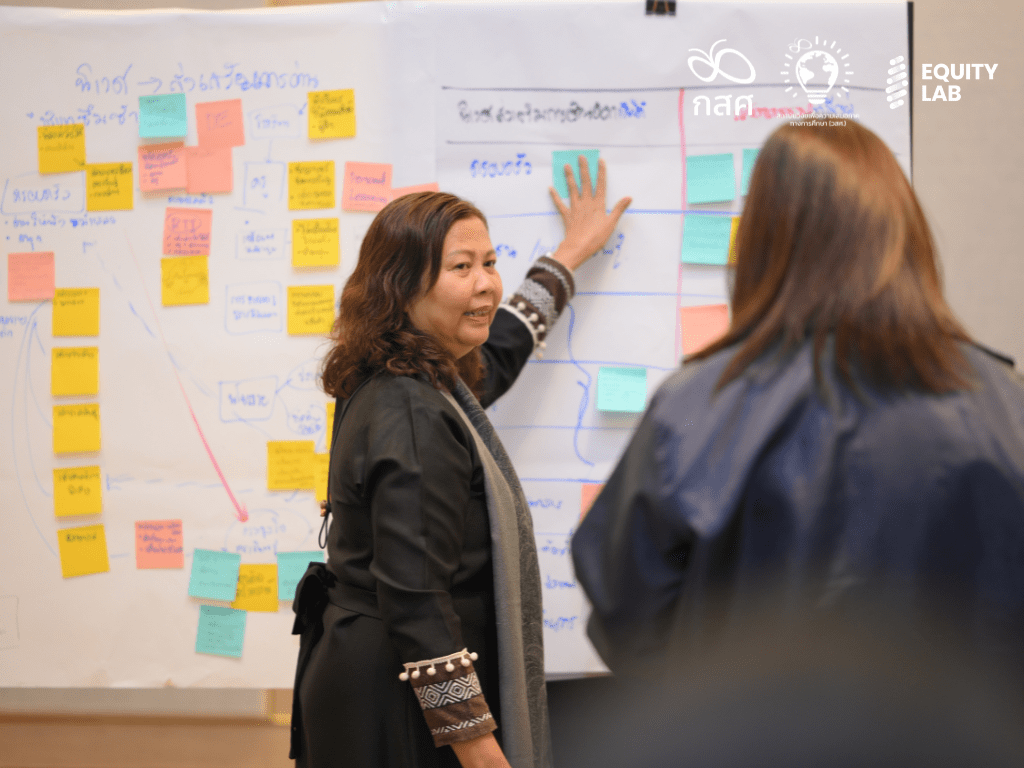
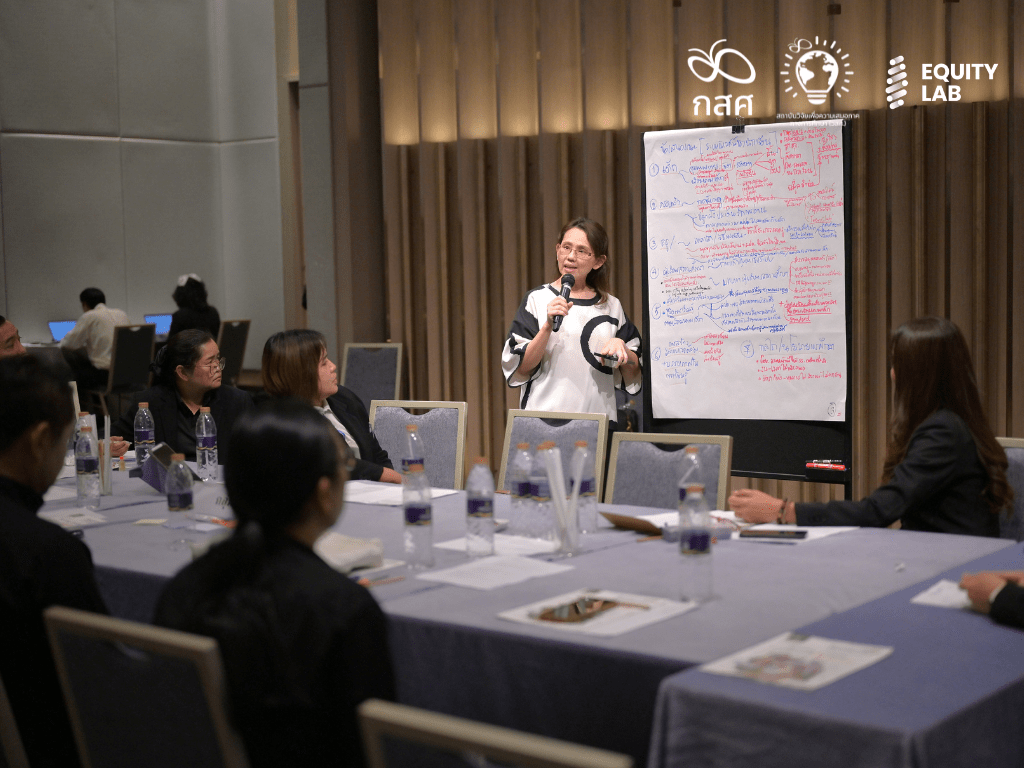
The meeting was divided into four group discussions, each group assigned a different task.
Group 1 identified four factors—children, schools, families, and policies—that contribute to the lack of continuity and sustainability in literacy initiatives, with an emphasis on the overall picture of illiteracy among Thai children and youth. They observed that pupils’ reading and writing skills are greatly impacted by their diversity, especially those from underprivileged groups who frequently utilize regional languages. In terms of schools, they felt that educators should develop curricula that are flexible, not unduly strict in substance, and relate learning to everyday life. In addition to properly reflecting the children’s learning, indicators must be in line with the parents’ learning abilities and the family’s financial preparedness. Lastly, they emphasized the necessity of national policies that support sustainable reading and writing, including community learning resources and access to a variety of excellent literature.
Group 2 discusses how curriculum and educational system variables contribute to illiteracy. It draws attention to the fact that the current curriculum structure has an excessive number of subject groups, with one instructor handling several subject areas, which makes teachers anxious. Additionally, a lot of schools are small, with mixed-grade classrooms and pupils of different skill levels, which makes it challenging for teachers to handle this diversity. Administrators at the policy level are ignorant and mindlessly obey orders without taking into account the duties of teachers. Reducing superfluous details and procedures in lesson plans, stressing the necessity for educators to modify their teaching strategies for age-appropriate learning, and emphasizing the ongoing integration between schools and universities—which are currently still divided—are other recommendations.
Group 3 pointed out that children from marginalized backgrounds frequently experience hardship, which causes them to miss school, when discussing illiteracy problems resulting from ethnic, socioeconomic, and cultural aspects. Teachers at remote schools frequently have several responsibilities, one of which is to screen students for certain learning disorders (LD). In terms of families, some parents lack literacy, while in other households, children live with grandparents who are unable to assist with homework. Children switching schools in the middle of the term can also be problematic, especially for members of ethnic minority groups who find it difficult to adjust to their native tongues and accents. Teachers are nevertheless needed to teach, even though some may lack the necessary training. An inventive “4-Step Ladder” method for preparing kids starting in kindergarten is the suggested remedy. The group also urges legislators to “return teachers to the classroom,” which would free them up to devote all of their time to teaching, lessen their other responsibilities, and create context-appropriate curricula.
Group 4 dealt with the issues of illiteracy resulting from different causes. This group concurred that health considerations play a role in youth illiteracy, pointing out that developmental problems, such as those related to nutrition, vision, hearing, and the development of fine and gross motor abilities, continue to have an impact throughout school age and elementary school. The Department of Health has previously gathered this data, but the Ministry of Education has not yet received it. As a result, there is a dearth of integrated data, and teachers are ignorant of the children’s histories. Teachers would be able to deliver more suitable instruction if they had this knowledge from the start. ADHD, especially attention deficit hyperactivity disorder (ADHD), and specific learning disabilities (LD) are common developmental problems in school-aged children. Due to inadvertent miscommunications, these kids frequently seem normal, which causes medical care to be delayed. They also exhibit symptoms of anxiety, despair, and a reluctance to study. Parents must contribute to this by changing their perspective, refraining from stigmatizing their kids, and keeping a close eye on their development.
Every educational institution has to deal with the issue of youth illiteracy, which is brought on by a number of interrelated elements, such as ethnicity, instructional materials, central policies, administration at all levels, children’s health, family upbringing, and socioeconomic situation. Promoting literacy in children is crucially dependent on communication both inside organizations and between organizations that are directly involved in educational development. Since it results in a genuinely tangible application, the mindset is crucial.